
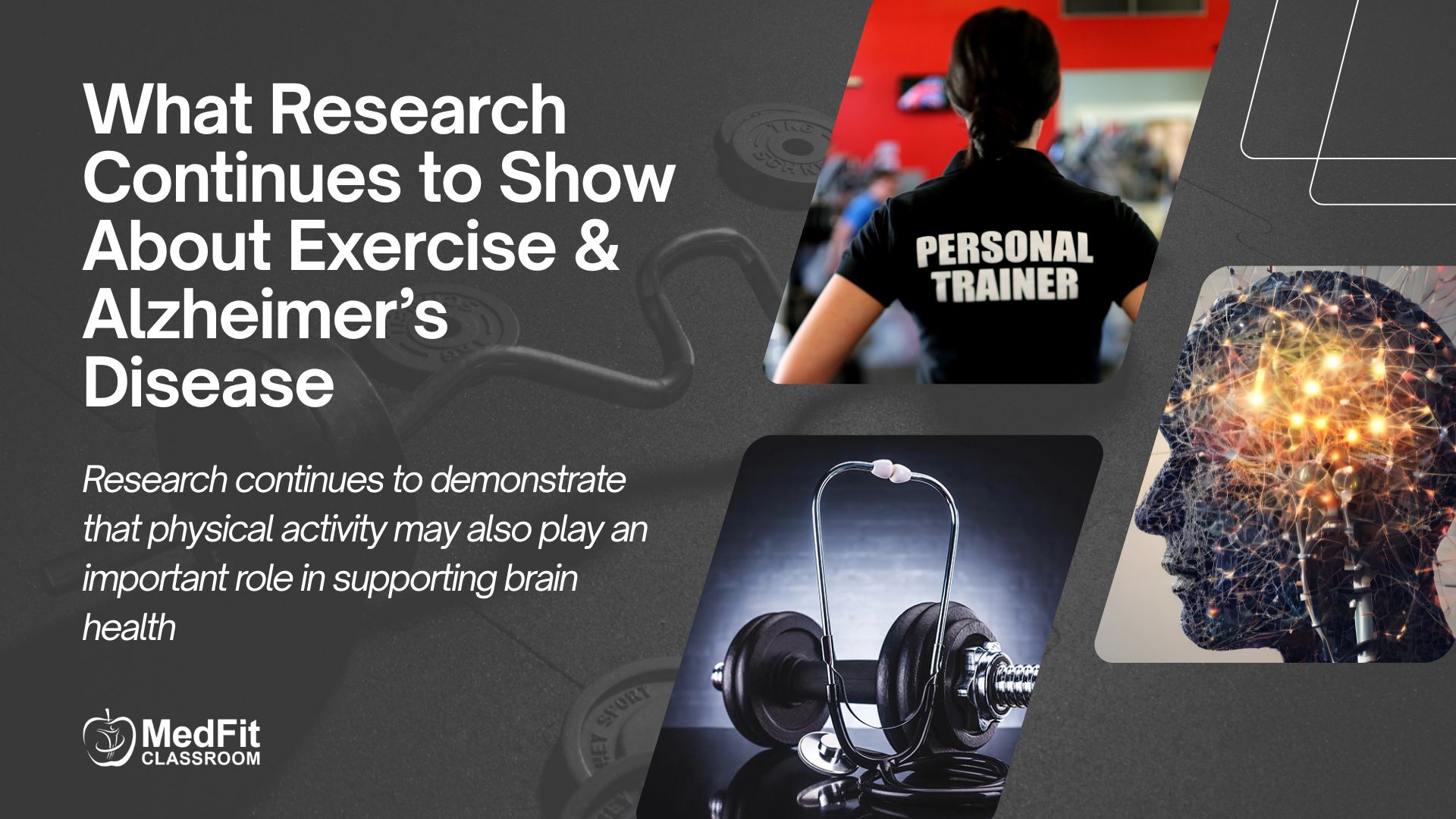
Alzheimer’s disease is often thought of primarily as a condition affecting memory and cognition, but research continues to demonstrate that physical activity may also play an important role in supporting brain health, physical function, mood, and quality of life in older adults living with cognitive decline.
One of the reasons exercise has received so much attention in Alzheimer’s research is because movement influences multiple systems within the body simultaneously. Physical activity has been associated with improvements in cardiovascular health, blood flow, metabolic function, balance, mobility, muscular strength, and neuroplasticity – all of which may impact overall brain health and daily function.¹
Research has also suggested that regular exercise may help support activities of daily living, reduce fall risk, improve sleep quality, decrease agitation and anxiety, and enhance overall well-being in some individuals living with Alzheimer’s disease and related dementias.²
Importantly, exercise programming for individuals with Alzheimer’s disease requires far more than simply “keeping someone active.” Factors such as communication strategies, cognitive limitations, safety considerations, wandering risk, behavioral symptoms, supervision needs, exercise environment, and stage of disease progression can all significantly influence programming success.
For fitness and healthcare professionals, understanding how to appropriately adapt exercise for cognitive impairment can help create safer, more supportive, and more meaningful movement experiences for clients.
FREE RESOURCES
- Webinar – Brain Fitness Research Roundup: https://youtu.be/uZlM7ngRkYg
- Webinar – Ask Me Anything About Brain Fitness: https://youtu.be/S9bSHVO1Eko
If you want to better support clients affected by cognitive decline through safe, evidence-based exercise, consider becoming an Alzheimer’s Disease Fitness Specialist. This online course was developed to help fitness and allied health professionals better understand Alzheimer’s disease, cognitive decline, exercise considerations, behavioral challenges, safety strategies, and evidence-based programming approaches for these clients.
References
- Erickson KI, Gildengers AG, Butters MA. Physical activity and brain plasticity in late adulthood. Dialogues in Clinical Neuroscience. 2013;15(1):99-108. https://www.ncbi.nlm.nih.gov/pmc/articles/PMC3622473/
- Alzheimer’s Association. Exercise and Physical Activity for People Living with Alzheimer’s Disease. https://www.alz.org/help-support/caregiving/daily-care/physical-activity
- Forbes D, Thiessen EJ, Blake CM, et al. Exercise programs for people with dementia. Cochrane Database of Systematic Reviews. 2015. https://www.cochranelibrary.com/cdsr/doi/10.1002/14651858.CD006489.pub4/full