
For many fitness professionals, menopause is still a misunderstood or overlooked topic.
But here’s the reality: If you’re working with women in their 40s, 50s, and beyond… you are already working with clients navigating menopause.
The question is not if… it’s whether you understand how to support them effectively. Because during this stage of life, the body changes in ways that directly impact exercise, recovery, and results.
What’s Actually Happening During Menopause?
Menopause is not just a hormonal shift. It’s a whole-body transition driven largely by declining estrogen levels.
These changes can lead to:
- Loss of muscle mass and strength
- Increased fat storage (especially abdominal)
- Decreased bone density
- Changes in energy, sleep, and mood
Research shows that muscle mass can decline significantly with age and hormonal changes, increasing the risk of functional limitations and injury. (1)
For trainers, this means, your “standard programming” may no longer apply.
Why Exercise Is Critical (Not Optional)
Menopause is often when clients feel like their body is “working against them.” But exercise becomes one of the most powerful tools for managing this transition.
Evidence shows that physical activity can:
- Improve cardiovascular and metabolic health
- Support bone density
- Enhance mood and sleep
- Improve overall quality of life (2)
Regular exercise is also associated with reducing menopausal symptoms and improving well-being. (3)
This is where fitness professionals become essential, not optional.
The Problem: Most Women Aren’t Getting Guidance
Despite the importance of exercise during menopause, most women are navigating it alone. One study found that 88% of women reported receiving no guidance on exercise during menopause. (4)
That’s a massive gap. And it creates a huge opportunity for fitness professionals who are prepared.
What Personal Trainers Often Get Wrong
Without specific education, trainers may unintentionally:
- Push intensity over recovery
- Ignore fatigue, sleep disruption, and stress
- Use weight loss–focused approaches that don’t match hormonal reality
- Overlook the importance of strength training and bone health
But menopause is not a time to train harder. It’s a time to train smarter.
What Trainers Should Prioritize Instead
1. Strength Training Is Non-Negotiable
Resistance training plays a critical role in:
- Preserving muscle mass
- Supporting metabolism
- Improving bone density
Research shows it can help counteract menopause-related muscle loss and improve overall function. It may also help reduce symptoms like hot flashes in some women. (5)
2. Recovery Matters More Than Ever
Hormonal changes impact sleep quality, stress response and recovery capacity.
This means programming needs to include:
- Adequate rest
- Flexible intensity
- Awareness of “off days”
3. Individualization Is Key
No two menopause experiences are the same. Clients may present with fatigue, anxiety, joint pain, low motivation and/or brain fog.
Exercise has been shown to help improve many of these symptoms, including fatigue, mood, and sleep quality. (6)
Your job isn’t to follow a template. It’s to adapt.
4. Education Builds Trust
Many women feel confused or frustrated during this stage. When you understand what they’re going through, you can:
- Normalize their experience
- Adjust expectations
- Build confidence
That’s where real coaching happens.
The Bigger Opportunity for Fitness Professionals
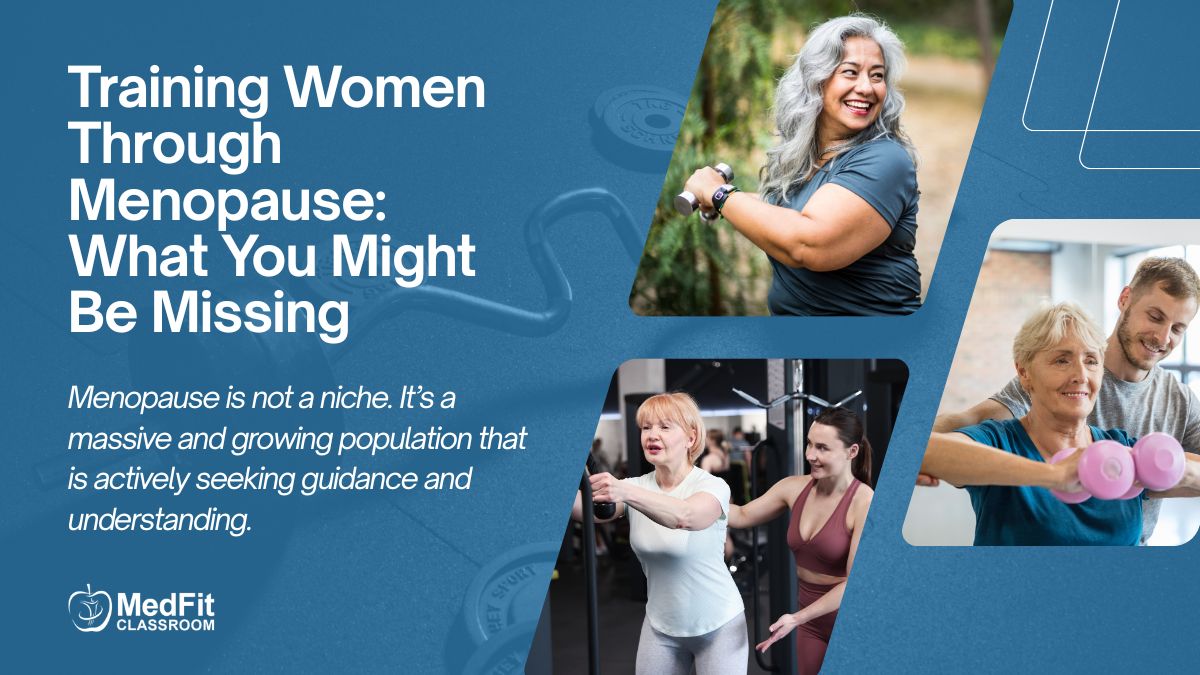
Menopause is not a niche. It’s a massive and growing population that is actively seeking guidance and understanding.
And right now, most of them are not getting it.
This is where you can stand out. Not just as a trainer, but as a trusted expert.
Ready to Better Support Your Clients?
If you want to confidently work with women navigating menopause and understand how to program safely and effectively during this stage, explore MedFit’s Menopause Health and Fitness Specialist online course.
The Menopause Health and Fitness Specialist Course is designed to help you:
- Understand the physiological changes of menopause
- Adapt programming for real-world clients
- Improve outcomes, confidence, and retention
Because your clients don’t need generic fitness advice. They need someone who understands what their body is going through.