
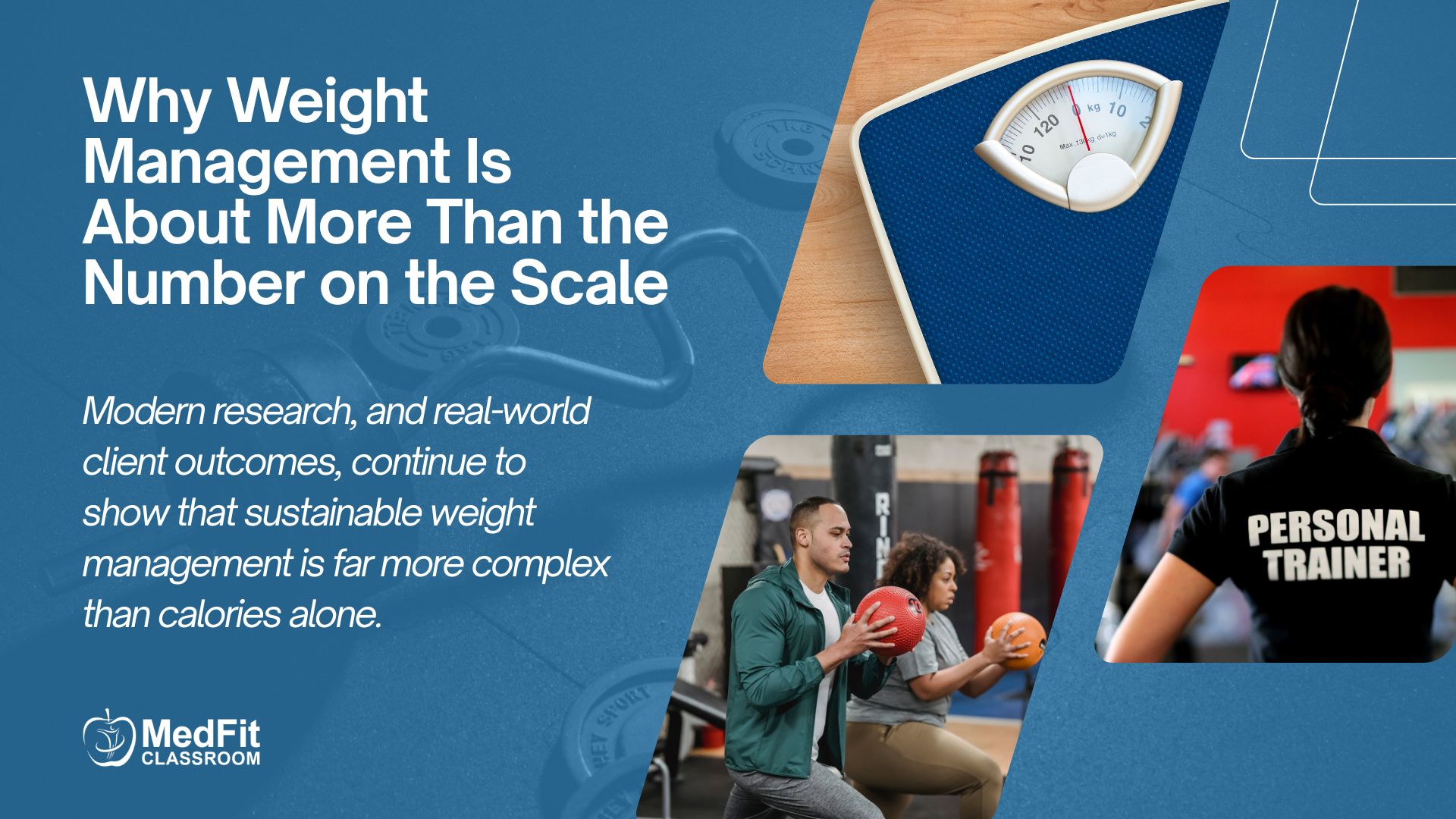
For decades, the fitness industry has largely approached weight management with a simple formula: eat less, exercise more, and watch the scale go down. But modern research, and real-world client outcomes, continue to show that sustainable weight management is far more complex than calories alone.
One of the biggest shifts in obesity and metabolic health research is the growing focus on visceral adipose tissue (VAT), the fat stored deep around the organs. Unlike subcutaneous fat, visceral fat is strongly associated with metabolic dysfunction, inflammation, insulin resistance, cardiovascular disease, and other chronic health concerns. In many cases, waist circumference and waist-to-height ratio may provide more meaningful insight into health risk than body weight itself.
This is one of the key concepts explored in the Weight Management Fitness Specialist course. Rather than focusing solely on cosmetic weight loss, the course takes a comprehensive approach to understanding obesity, movement, nutrition, psychology, behavior change, assessment, coaching, and long-term lifestyle strategies.
Another important perspective emphasized throughout the course is the difference between “exercise” and simply moving more. Many individuals struggling with obesity are intimidated by intense workout programs or extreme approaches that are difficult to sustain. Instead, increasing daily movement, reducing sedentary behavior, and building gradual, realistic habits can have a profound impact on long-term health outcomes.
The course also examines the psychological and social aspects of weight management. Stress, mindset, sleep, emotional relationships with food, environment, and behavior patterns all influence success. Sustainable change often requires more than a workout plan — it requires understanding the person as a whole.
For fitness and allied health professionals, this shift in perspective is critical. Clients today are looking for knowledgeable professionals who understand the complexities of obesity and can provide supportive, evidence-informed guidance that goes beyond restrictive dieting or aesthetics alone.
The Weight Management Fitness Specialist course was designed to help professionals better understand these complexities while developing practical coaching and programming strategies that support long-term client success.