
May is National Arthritis Awareness Month, a time to spotlight one of the most common chronic conditions affecting adults, and one of the most misunderstood when it comes to exercise.
For fitness professionals, this is more than awareness; it’s an opportunity to change lives through movement.
Exercise Is Not Optional. It’s Foundational.
For decades, individuals with arthritis were told to rest and protect their joints. Today, research tells a very different story.
Exercise is now widely recognized as one of the most effective non-drug treatments for arthritis, helping reduce pain and improve function. (1)
Regular physical activity can:
- Strengthen muscles surrounding joints, providing support and stability
- Reduce joint stiffness and improve mobility
- Decrease pain and inflammation
- Improve energy, sleep, and overall quality of life
In fact, consistent movement helps lubricate joints and maintain cartilage health, which is critical for long-term joint function. (2)
The Role of the Fitness Professional
Despite the evidence, many clients with arthritis remain inactive, often due to fear of pain or causing further damage.
This is where fitness professionals play a critical role.
Guidelines emphasize that physical activity should be a core component of arthritis management, not an afterthought.
(3)
As a fitness professional, you are uniquely positioned to:
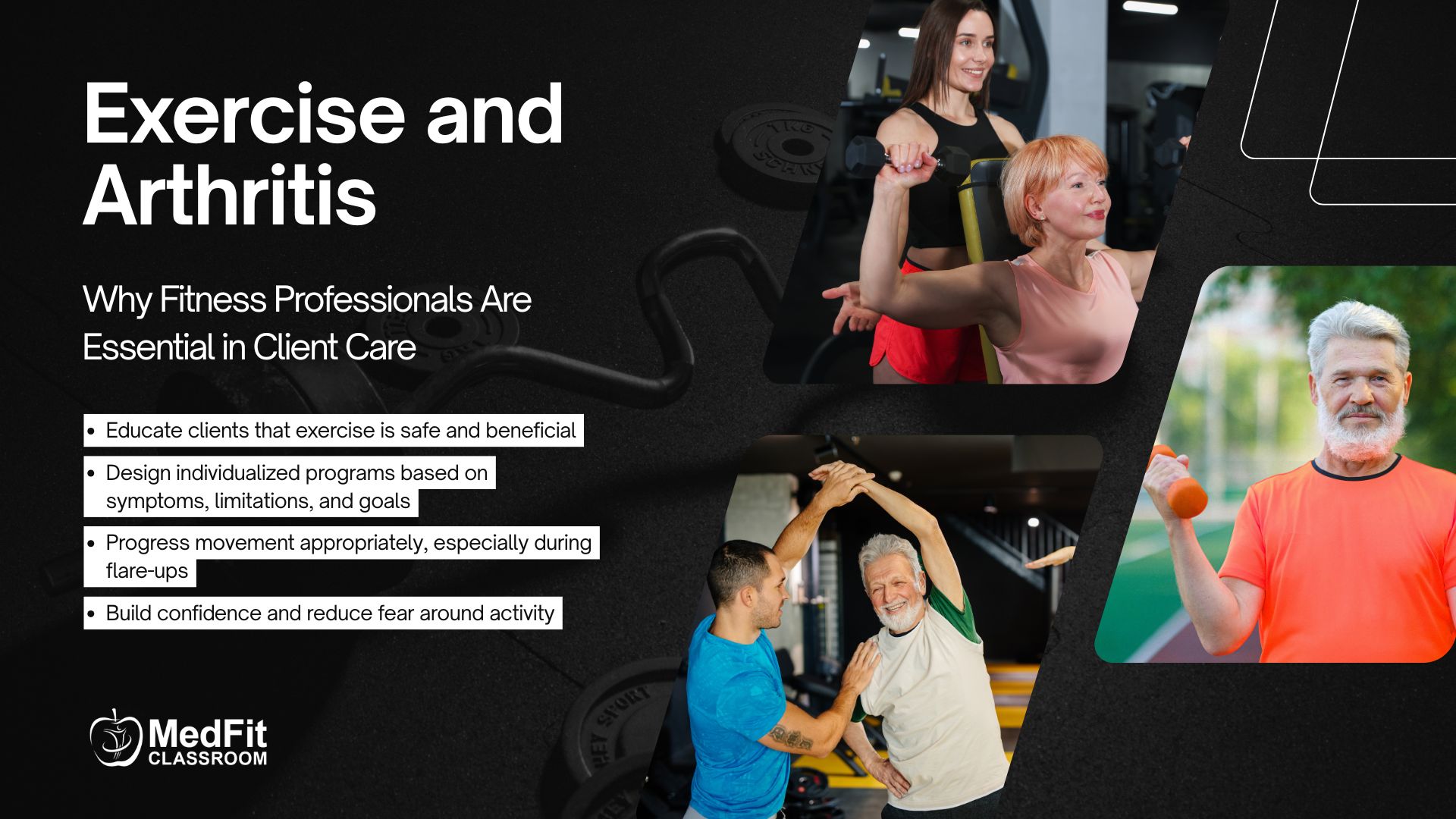
- Educate clients that exercise is safe and beneficial
- Design individualized programs based on symptoms, limitations, and goals
- Progress movement appropriately, especially during flare-ups
- Build confidence and reduce fear around activity
Your guidance can be the difference between a client declining in function or thriving.
What Type of Exercise Works Best?
The most effective programs for arthritic clients include a combination of:
- Aerobic (low-impact): walking, cycling, swimming
- Strength training: to support joints and improve function
- Flexibility and mobility work: to reduce stiffness
- Balance training: to reduce fall risk
Low-impact aerobic exercise is particularly valuable, as it promotes joint lubrication and circulation while minimizing stress on joints.(4)
Most guidelines recommend (5):
- 150 minutes per week of moderate aerobic activity
- Strength training at least 2 days per week
The Bigger Picture: Movement Is Medicine
Arthritis doesn’t just affect joints. It impacts independence, mental health, and overall quality of life.
Exercise has been shown to:
- Improve daily function
- Reduce fatigue
- Enhance mood and mental well-being
- Help manage comorbid conditions like obesity and heart disease(6)
For your clients, movement is not just exercise, it’s freedom, confidence, and longevity.
Become the Specialist Your Clients Need
As arthritis rates continue to rise, so does the need for qualified fitness professionals who understand how to work safely and effectively with this population.
If you’re ready to expand your impact and confidently train clients with arthritis, consider advancing your expertise as an Arthritis Fitness Specialist.
This course will equip you with the tools, knowledge, and programming strategies to:
- Safely train clients with various forms of arthritis
- Modify exercises for pain, stiffness, and mobility limitations
- Deliver evidence-based, client-centered programming
References:
- https://www.arthritis.org/health-wellness/healthy-living/physical-activity/getting-started/benefits-of-exercise-for-osteoarthritis
- https://www.hopkinsarthritis.org/patient-corner/disease-management/role-of-exercise-in-arthritis-management/
- https://ard.bmj.com/content/77/9/1251
- https://stlukesphysicaltherapy.com/movement-is-medicine-physical-therapy-arthritis/
- https://www.cdc.gov/arthritis/prevention/index.html.
- https://www.canr.msu.edu/news/understanding_arthritis_the_benefits_of_physical_activity