
When it comes to obesity, the conversation often centers on two things: diet and exercise. Eat less, move more. But the science of weight regulation tells a much more complicated story.
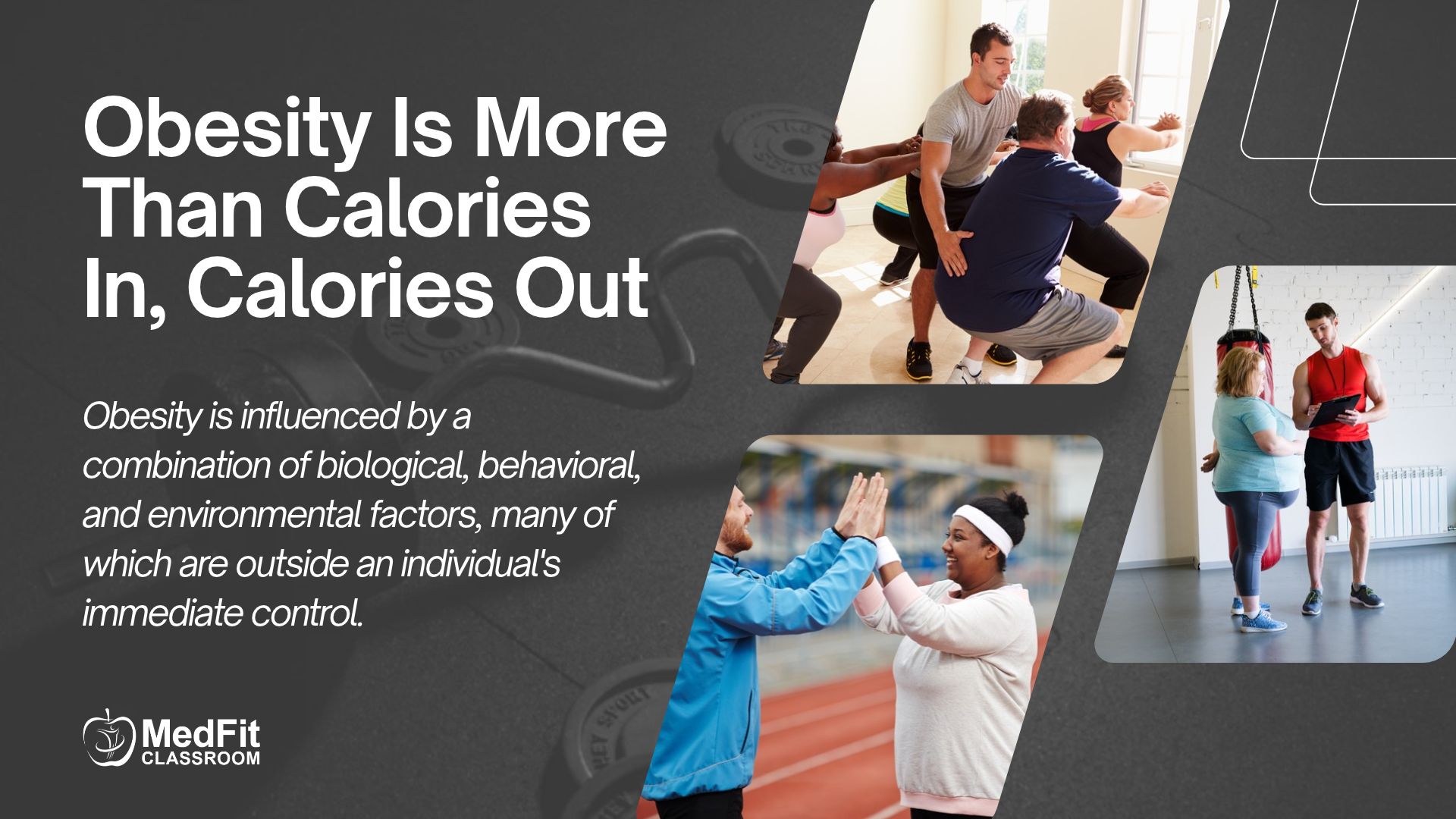
Obesity is influenced by a combination of biological, behavioral, and environmental factors, many of which are outside an individual’s immediate control. Understanding how these factors interact is important for fitness professionals who work with clients managing their weight.
Why Weight Loss Can Become More Difficult Over Time
One of the challenges of long-term weight management is that the body doesn’t necessarily respond to weight loss the way we might expect.
Research has shown that significant weight loss can trigger metabolic adaptations. As body weight decreases, the body generally requires fewer calories to function. In some individuals, energy expenditure may decrease beyond what would be expected from the reduction in body size alone.
At the same time, hormones involved in regulating hunger and fullness can change. Research has documented increased hunger signals and reduced satiety signals following weight loss, with some of these changes persisting for at least a year.
This helps explain why maintaining weight loss can be so challenging. It’s not necessarily a matter of someone losing motivation or abandoning healthy habits. Their physiology may actually be working against their efforts.
The Environment Matters, Too
Another useful framework for understanding obesity is the socioecological model, which looks at how multiple layers of influence shape health behaviors.
These layers include individual factors, relationships, institutions, communities, and public policies.
Consider something as simple as recommending that a client increase their daily physical activity. At the individual level, they may be motivated and understand the benefits of exercise. But their ability to follow through may depend on factors such as:
- Whether their neighborhood has sidewalks or safe walking areas.
- Whether their work schedule allows time for physical activity.
- Whether they have access to affordable fitness facilities.
- Whether family members or friends support their efforts.
These circumstances can influence behavior regardless of how motivated someone may be.
What This Means for Fitness Professionals
Understanding these influences doesn’t mean diet and exercise are unimportant. Physical activity remains essential for overall health, physical function, and long-term weight management.
But it does mean that effective programming requires more than prescribing exercise and encouraging clients to reduce their calorie intake.
For example, a client struggling with consistency may benefit from examining barriers in their daily environment rather than simply being told to exercise more. Someone experiencing chronic stress or inadequate sleep may need support in addressing those factors alongside their fitness routine.
Recognizing these challenges allows fitness professionals to create more realistic, individualized programs and approach weight management with greater understanding and empathy.
The goal isn’t simply to help clients change their behaviors. It’s to understand what’s influencing those behaviors in the first place.
Further Education
Watch for Free: Health Benefits of Physical Activity Independent of Weight Loss for Clients with Obesity
This webinar discusses
- The cellular, metabolic, systemic and brain health benefits of physical activity independent of weight loss
- A new framework for initiating and sustaining physical activity behaviors in clients with overweight and obesity
- A path forward in expanding your client base to be more inclusive of people with overweight and obesity
Obesity Fitness Specialist 10-hour online course
The Obesity Fitness Specialist online course explores the biochemistry, metabolism, and pathophysiology of obesity as well as the multifaceted causes, myriad solutions, and the emerging data on weight bias and health at every size.
Save 50% on the course with coupon OBESITY50. Expires Friday, November 6. VIEW COURSE DETAILS