
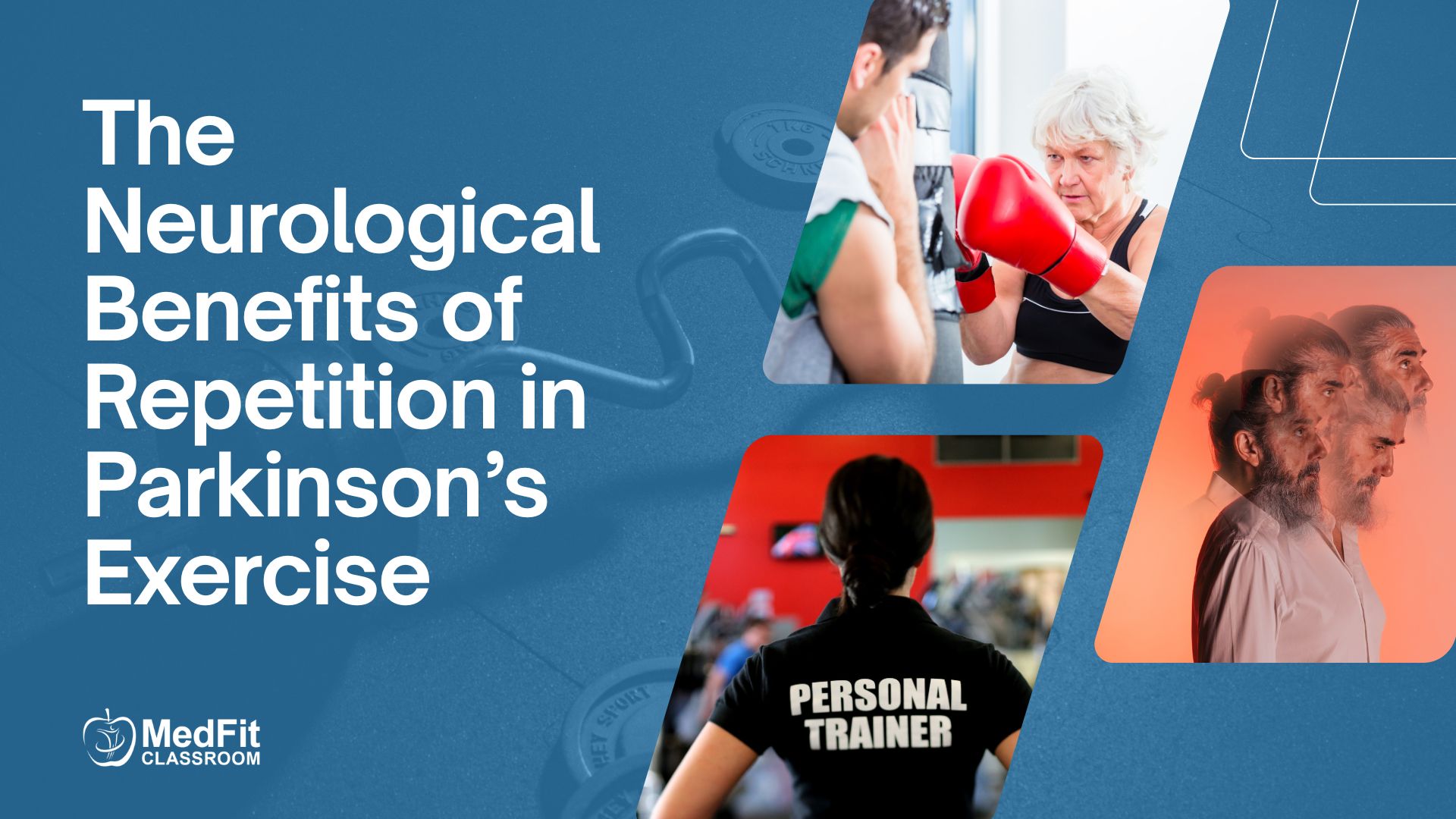
Fighters love to tease me about my inability to count repetitions correctly — and about how many times I make them repeat an exercise during a one-hour class! And honestly… they’re not wrong. The counting? That’s just a busy mind trying to keep up with everything happening in the room. But the repetition of exercises? There is absolutely a neurological reason for the “torture”… I mean training!
Close your eyes for a moment and visualize the class process.
We begin by establishing tall posture, then move through the micro warm-up, creating communication between the brain and the body. Those movements, however simple they may seem, are then built upon during the dynamic warm-up.
The dynamic warm-up gives us the opportunity to elevate body temperature, move in multiple directions, engage multiple joints at the same time, process information, execute movement in a timely manner, and actively stretch muscles in preparation for the strength and boxing challenges ahead.
What you may or may not notice is that many of the dynamic warm-up exercises closely resemble the strength and boxing challenges later in class — and if you noticed that, you are 100% correct!
For example, during the dynamic warm-up we may perform “T” arms with a tap-back or a reverse lunge. Later, during the strength portion of class, we repeat that same movement pattern using resistance tubing, or perhaps we move to the floor where I challenge you to perform it from your knees while holding a weight and extending one leg straight behind you.
Then we take it a step further. During boxing drills, I may have you complete a punching sequence followed immediately by a tap-back or reverse lunge.
Why? Because repetition with progression is one of the ways we help the brain and body create stronger, more automatic movement patterns. Each repetition reinforces posture, balance, coordination, timing, strength, and cognitive processing. We are not simply exercising muscles — we are training the nervous system.
So yes… There is a method to my madness. Even if I occasionally lose count along the way!
Let’s take a deeper dive and discover more benefits of repetition and how it can slow the progression of Parkinson’s disease.
1. Drives Neuroplasticity (Brain Rewiring)
Parkinson’s disease disrupts the basal ganglia’s ability to automatically initiate and sequence movement. Repetition helps the brain:
- Strengthen alternative neural pathways such as those in the motor cortex that decides which movement to execute, or those in other midbrain areas that help to coordinate movement
- Shift control from impaired automatic pathways to goal-directed cortical pathways
- Improve motor learning through repeated firing of neural circuits, which in turn strengthens neurons and “re-teaches” them how to fire in response to appropriate stimuli
“Neurons that fire together, wire together.”
2. Improves Motor Learning & Retention
People with PD often need more repetitions to learn and retain a skill. Repeated practice:
- Enhances procedural memory facilitated by the basal ganglia and motor loop
- Reinforces movement patterns within your muscles
- Improves carryover to daily activities (walking, turning, reaching) by teaching your brain and neuromuscular junctions that this is the “correct” pattern to anticipate
The brain really likes patterns, and it likes to be right. Because of this, repetition of movements helps to reinforce the correct initiation of movement and muscle stimulation, and once the brain realizes this is correct, establishes a pattern that it wants to follow that makes it easy and energy efficient. This is why repeating a movement early, mid, and late in a class is far more effective than doing it once.
3. Reduces Cognitive Load
Repetition lowers the mental effort required to perform a task. With repetition:
- Movements become more predictable and establishes pattern recognition in the brain
- Less processing is required for each step, making it energetically efficient
- Energy can shift from “thinking” to “executing” and use different areas for coordination, rather than spending time thinking about which movement is “correct.”
This is especially important for individuals with:
- Cognitive slowing
- Dual-task challenges
- Fatigue or off days
4. Enhances Cue Responsiveness
Repeated exercises paired with consistent cues (verbal, visual, rhythmic) help:
- Strengthen cue-movement associations, which helps exercise different neural pathways
- Improve reaction time by improving pattern recognition
- Increase independence over time
- Eventually, fighters begin to self-cue—an essential skill for daily life.
5. Improves Movement Amplitude & Quality
PD often causes movements to become smaller, slower, and less coordinated. Repetition:
- Reinforces large, intentional movements and reroutes those pathways
- Improves speed, strength, and coordination
- Helps reset the internal “calibration” of what normal movement feels like
- This is one reason BIG, LOUD, and POWERFUL movements must be repeated
6. Supports Automaticity (What PD Steals)
While Parkinson’s impairs automatic movement, repetition helps:
- Rebuild partial automaticity
- Reduce freezing and hesitation
- Improve transitions (sit-to-stand, gait initiation, turning)
- Even if full automaticity isn’t restored, repetition increases confidence and flow.
Become a Parkinson’s Disease Fitness Specialist
Over the past decade, numerous exercise methods have surfaced all claiming to “slow the progression of the disease.” Research studies reveal more and more information about the epidemiology of the disease while fitness professionals are offering more personal training and/or coaching of group exercise classes specifically for those living with Parkinson’s disease. The goal of the Parkinson’s Disease Fitness Specialist online course is to bring the research, medical and fitness fields together so that fitness professionals gain a comprehensive understanding of Parkinson’s disease, and learn how to work with those who have it.
Click for details & enrollment
All MedFit courses are 100% online and self-study. Start and complete at your own pace.
Approved for CEUs by ACE, AFAA, NASM and canfitpro.
Written by Colleen Bridges, M.Ed, NSCA-CPT, PDFS, Belmont University Occupational Therapy Advisory Board, 2020 MedFit Education Professional of the Year & Renee Rouleau- M.S. Neuroscience and Bridges for Parkinson’s Medical Science Advisor. Reprinted with permission from bridgesforparkinsons.com